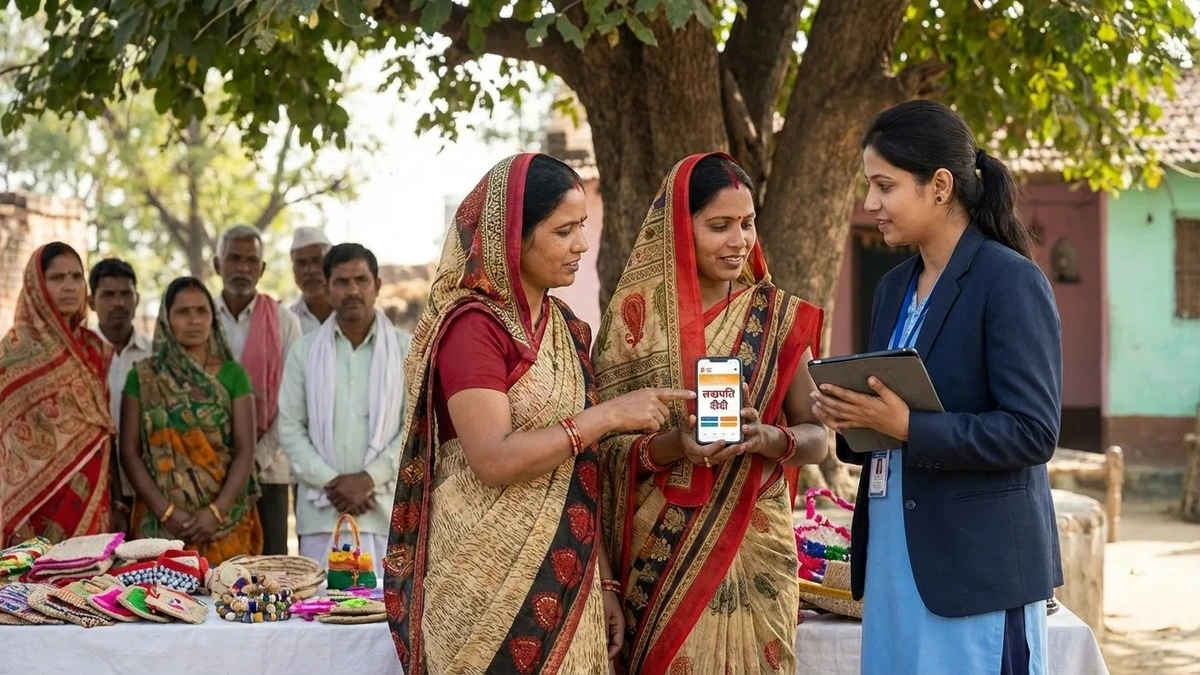
In a monumental stride towards women empowerment and a self-reliant India, the Lakhpati Didi Yojana has emerged as a transformative force in the rural landscape. Launched by the Government of India, this ambitious scheme aims to convert women in Self-Help Groups (SHGs) into successful micro-entrepreneurs, ensuring they have a sustainable annual income of at least ₹1,00,000. By 2025, this initiative is not just a government program but a social movement fostering financial independence and leadership among crores of women .
This comprehensive guide covers everything you need to know about the Lakhpati Didi Yojana, including its objectives, eligibility criteria, financial assistance structure, and how it is changing lives across the country.
What is the Lakhpati Didi Yojana?
The Lakhpati Didi Yojana is a flagship initiative under the Deendayal Antyodaya Yojana – National Rural Livelihoods Mission (DAY-NRLM) , Ministry of Rural Development . The term “Lakhpati Didi” refers to a woman SHG member who has achieved a sustainable household income of over ₹1 lakh per annum.
Prime Minister Narendra Modi first announced the scheme on August 15, 2023, with the goal of creating 3 crore “Lakhpati Didis” by 2027. The Union Budget 2024 further reinforced this target, aiming to empower three crore SHG members, highlighting the government’s commitment to rural women’s economic upliftment .
Key Highlights of the Scheme
To understand the scope of this yojana, let us look at the key details in the table below:
| Feature | Details |
| Scheme Name | Lakhpati Didi Yojana |
| Launch Date | Announced on 15th August 2023 |
| Objective | To enable women SHG members to earn a sustainable annual income of over ₹1 lakh. |
| Target | Create 3 Crore “Lakhpati Didis” by 2027. |
| Nodal Ministry | Ministry of Rural Development (Deendayal Antyodaya Yojana – NRLM) |
| Primary Beneficiaries | Women members of Self-Help Groups (SHGs) across India. |
| Key Support | Skill training, financial assistance (loans & funds), market linkages, and digital literacy. |
| Technical Partner | Digital India Corporation (manages the Digital Aajeevika Register and LokOS app) . |
| Official Portal | Primarily managed through state NRLM portals; central dashboard at dic.gov.in/lakhpati-didi. |
Objectives and Goals of the Yojana
The Lakhpati Didi scheme is designed with a multi-pronged approach to ensure holistic development and economic stability for rural women. Its core objectives include:
- Income Generation: To facilitate diversified livelihood opportunities so that women can earn a minimum of ₹1,00,000 per year.
- Financial Inclusion: To provide women with direct access to affordable credit, bank linkages, and government subsidies.
- Skill Development: To equip women with modern skills—from digital literacy to advanced agricultural techniques like drone operation .
- Sustainable Livelihoods: To promote integrated farming, animal husbandry, small businesses, and other non-farm activities that ensure year-round income.
- Social Empowerment: To build confidence and decision-making capabilities, enabling women to become leaders in their communities and contributors to the rural economy .
Eligibility Criteria for Lakhpati Didi Yojana
To avail the benefits of the Lakhpati Didi Yojana, applicants must meet specific eligibility requirements. While these can vary slightly from state to state, the general criteria are as follows:
| Criteria | Description |
| Citizenship | Must be a permanent resident of India. |
| Gender | Applicant must be a woman. |
| SHG Membership | Must be an active member of a Self-Help Group (SHG) registered under the DAY-NRLM, typically for at least 1-2 years . |
| Age | Generally between 18 to 50 years, though this can vary by state guidelines . |
| Economic Status | Priority is given to women from low-income households or those living below the poverty line . |
| Livelihood Activity | Willingness to engage in at least two livelihood activities to diversify income sources . |
Financial Assistance and Support Structure
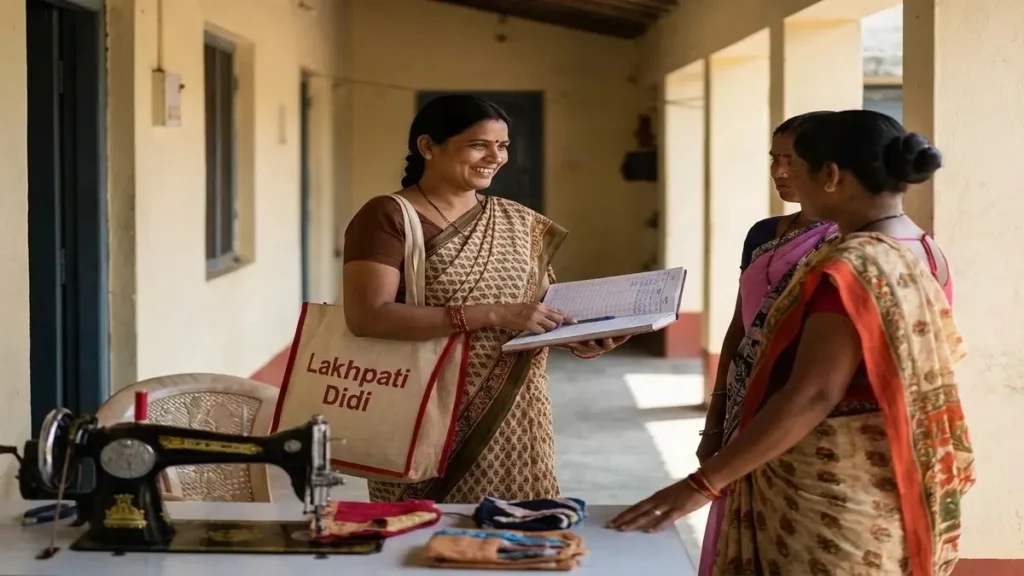
One of the most compelling aspects of the Lakhpati Didi Yojana is the robust financial ecosystem it creates for women. Support is provided at multiple levels, from seed money for groups to individual loans for enterprises.
1. Capitalization Support (Funds for SHGs)
Before accessing bank loans, SHGs receive grants to strengthen their internal financial health.
| Fund Type | Purpose | Amount Provided |
| Revolving Fund (RF) | To boost the SHG’s internal lending capacity for small, immediate needs of members. | ₹20,000 to ₹30,000 per SHG . |
| Community Investment Fund (CIF) | To provide resources to SHGs and their federations for starting socio-economic activities. | Up to ₹2.5 Lakh per SHG . |
| Vulnerability Reduction Fund (VRF) | Emergency corpus for health crises or natural calamities. | Up to ₹1.5 Lakh per village organization . |
2. Bank Loan Assistance
Once the SHG is stable, members can leverage it to access formal credit.
- Collateral-Free Loans: SHGs can avail of collateral-free business loans up to ₹20 Lakh .
- Interest Subvention: To make credit affordable, the government provides an interest subsidy. For loans up to ₹3 Lakh, the effective interest rate is capped at 7% per annum .
- Overdraft Facility: Women SHG members holding a Jan-Dhan account are eligible for an overdraft facility of ₹5,000 .
3. Support for Individual Enterprises
For women looking to scale up their individual businesses beyond the group structure:
- Credit Guarantee: Loans up to ₹5 lakh for individual enterprises can be covered under credit guarantee schemes.
- Interest Subvention for Individuals: In some states, a 2% interest subvention is provided on timely repayment of loans up to ₹1.5 lakh .
Required Documents
Applicants typically need to submit the following documents when applying for or being enrolled in the scheme:
- Aadhaar Card (Identity Proof)
- PAN Card
- Residence/Domicile Certificate
- Bank Account Passbook (for DBT)
- Passport Size Photograph
- Active Mobile Number
- SHG Membership Proof (Group registration ID)
Resent Post- click hear
How to Apply for the Lakhpati Didi Yojana
The application process is designed to be accessible, leveraging both digital platforms and grassroots-level support.
1. Join a Self-Help Group (SHG):
The primary prerequisite is being part of an SHG. If you are not already a member, visit your local Anganwadi center, Gram Panchayat, or Block Development Office to join an existing SHG.
2. Identification and Survey:
Local authorities (NRLM officials, community resource persons) conduct surveys to identify potential “Lakhpati Didi” based on their livelihood activities and income potential. Your details are captured in the Digital Aajeevika Register .
3. Training and Capacity Building:
Selected women undergo training in entrepreneurship, financial literacy, and specific skill sets related to their chosen trade (e.g., dairy farming, tailoring, food processing).
4. Financial Assistance and Implementation:
After training, women (through their SHGs) can access the Revolving Fund, CIF, or bank loans to start or expand their enterprises.
5. Offline Application:
In many states, you can also collect a physical application form from your nearest Block Development Office or District Rural Development Agency (DRDA) .
Real-Life Impact: State-Wise Success Stories
The Lakhpati Didi Yojana is not just a theoretical concept; it is yielding impressive results on the ground. States across India are competing to empower their women.
- Odisha: Odisha has emerged as the top-performing state, transforming nearly 17 lakh women into Lakhpati Didis. Nayagarh district boasts a remarkable 98% success rate. The state aims to create 25 lakh Lakhpati Didis by 2027, with initiatives like the ‘Subhadra Shakti Cafe’ run entirely by SHG women .
- Gujarat: In Gujarat, over 1.48 lakh women have already surpassed the ₹1 lakh annual income mark. From women in Banaskantha making cotton wicks to SHGs in Tapi running successful restaurants with monthly turnovers of ₹3.5-4 lakh, the scheme is thriving .
- Tripura: The northeastern state has achieved a 95% success rate, with 1,08,281 women out of a target of 1.14 lakh becoming Lakhpati Didis. This has been achieved through Integrated Farming Clusters (IFCs) involving piggery, poultry, and fisheries .
Technology and the Lakhpati Didi
In a unique convergence, the scheme now includes a digital component. Digital India Corporation acts as the technical partner, managing the Lakhpati Didi platform through the LokOS app. This app digitizes records, tracks real-time transactions, and maintains transparency through the Digital Aajeevika Register .
Furthermore, the 2025 update links the scheme with the “Namo Drone Didi” initiative, providing subsidies and training for SHG women to use drones in agriculture, thereby modernizing farming techniques and boosting income .
Conclusion
The Lakhpati Didi Yojana 2025 is a testament to India’s commitment to women-led development. By combining financial support with skill development and market linkages, it is successfully turning crores of rural women from job-seekers into job-creators. As more women join the ranks of these financially independent “Didis,” they are not only transforming their own families’ futures but also strengthening the very foundation of the rural Indian economy.
If you are a member of an SHG, we encourage you to contact your local block development office or visit the official NRLM portal to learn how you too can become a Lakhpati Didi.
Frequently Asked Questions (FAQs)
1. What is the minimum income required to become a Lakhpati Didi?
A woman is classified as a Lakhpati Didi when her household earns a sustainable annual income of at least ₹1,00,000 (One Lakh Rupees) or more.
2. Is this scheme providing direct cash benefits?
No, there is no direct cash transfer. The scheme provides indirect financial support through Revolving Funds (RF), Community Investment Funds (CIF), and subsidized bank loans to help women start businesses.
3. What is the maximum loan amount available under this scheme?
Self-Help Groups (SHGs) can avail of collateral-free business loans up to ₹20 Lakh under the DAY-NRLM framework to support their livelihood activities.
4. How can I apply for the Lakhpati Didi Yojana?
You must first be a member of a Self-Help Group (SHG). Visit your local Block Development Office or Gram Panchayat to get enrolled and receive training under the scheme.
5. Where can I check the list of selected beneficiaries?
The beneficiary list is available on the official state NRLM portals (e.g., nrlm.gov.in) or can be checked at your nearest Block Development Office.
1 thought on “Lakhpati Didi Yojana 2025: Empowering Rural Women”