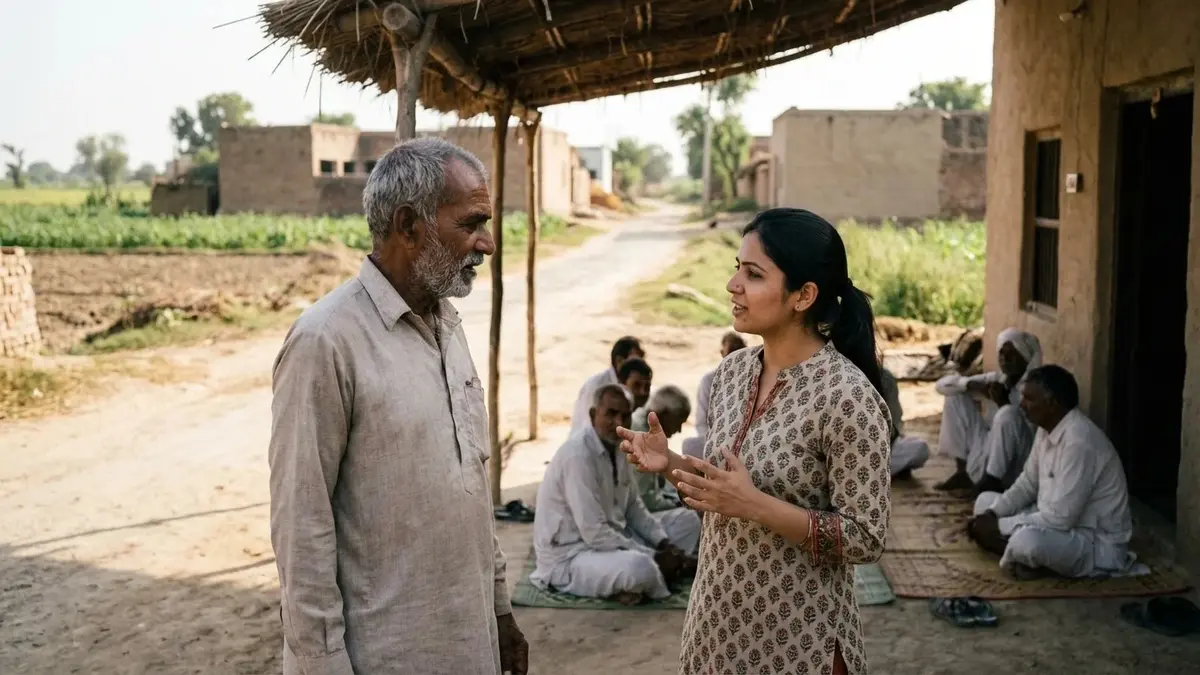
The Mahatma Gandhi National Rural Employment Guarantee Act (MGNREGA) is not just a government scheme; it is a lifeline for millions of rural families in India. Launched in 2005, this act provides a legal guarantee of work, aiming to improve livelihood security. In simple words, if an adult in a rural area wants to work, the government is legally bound to provide them employment.
As of early 2026, the scheme is at a crucial juncture. While the government has proposed a new scheme called VB-G RAM G, the original MGNREGA remains a hot topic of debate . In this blog post, we will look at the original scheme, its massive impact, and the latest data in a simple, easy-to-understand format.
What is MGNREGA? (The Basics)
MGNREGA was passed by the Indian Parliament in 2005. Its main goal is to provide at least 100 days of guaranteed wage employment in a financial year to every rural household whose adult members volunteer to do unskilled manual work .
If the government fails to provide work within 15 days of applying, the applicant is entitled to an “unemployment allowance.” This Right to Work is what makes MGNREGA a powerful tool for social security.
Key Objectives:
- Provide Income Security: To supplement the income of rural families when other work is scarce.
- Create Durable Assets: To build productive assets like ponds, wells, and roads that strengthen the rural economy .
- Empower Women: To provide a steady source of income for women, promoting financial independence .
- Strengthen Panchayati Raj: To involve local village bodies (Gram Panchayats) in planning and implementing these works.
MGNREGA at a Glance (Latest Data Table)
To understand the scale of this scheme, let’s look at the key data points from official sources. The data below reflects the most recent figures released by the Press Information Bureau (PIB) and other government reports.
| Particulars | Latest Data (as of 2025-26) | Key Insight |
| Budget Allocation (FY 2025-26) | ₹86,000 crore | This is the highest allocation since the scheme began, showing the government’s commitment to rural employment . |
| Funds Released (Current FY) | ₹45,783 crore (as of July 2025) | Out of this, ₹37,912 crore has been directly transferred as wages . |
| Person-Days Generated (FY 2024-25) | 290.60 crore | This measures the total number of days of work provided to all laborers combined . |
| Households Employed (FY 2024-25) | 15.99 crore families | Nearly 16 crore rural families benefited from the scheme . |
| Women Participation (FY 2024-25) | 58.15% | For the first time, women’s participation crossed 58%, highlighting the scheme’s role in women’s empowerment . |
| Job Cards Deleted (FY 2024-25) | 58,826 | Job cards are regularly verified to remove fake or duplicate entries. This ensures transparency . |
| Geo-tagged Assets | 6.36 crore+ assets | The government has geo-tagged over 6.36 crore assets (like ponds and roads) to monitor quality and prevent fraud . |
| Wage Payments via eFMS | 99.94% | Almost all wage payments are now done electronically directly into bank accounts, reducing corruption . |
The Impact of MGNREGA: More Than Just Employment
MGNREGA is not just about giving people money; it is about building the future of villages.
1. Water Conservation and Agriculture
A major portion of MGNREGA funds is spent on agriculture and allied activities. In fact, 44.14% of total expenditure is incurred on Agri and allied activities .
- Example: In Assam, farmers faced severe irrigation issues. Under MGNREGA, a distributor canal was constructed. This provided irrigation to nearby fields and generated 1,134 man-days of local employment .
2. Focus on Technology and Transparency
The government has introduced several tech-based initiatives to make the scheme leak-proof :
- National Mobile Monitoring System (NMMS): An app to capture real-time attendance of workers with geo-tagged photographs.
- Aadhaar Payment Bridge System (APBS): Over 13.05 crore active workers are linked to this, ensuring money reaches the right person.
- Yuktdhara Portal: A GIS-based portal developed with ISRO for better planning of where to build assets.
3. Social Empowerment
The scheme mandates that social audits be conducted twice a year. This means villagers themselves can check the muster rolls (attendance registers) and payment slips to ensure there is no corruption .
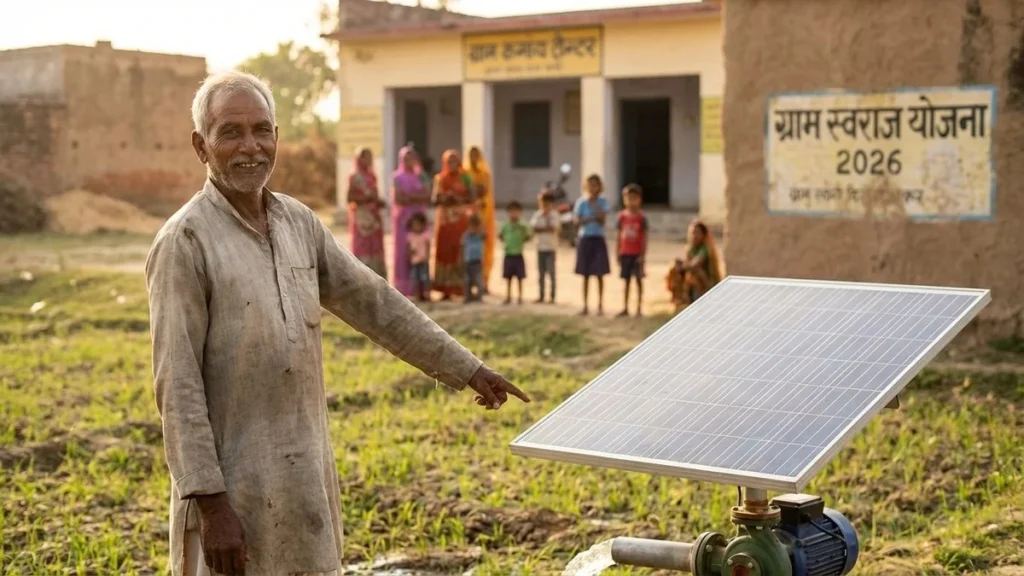
Recent Developments: The Debate Around VB-G RAM G
Recently, the government passed a new act called the Viksit Bharat – Guarantee for Rozgar and Ajeevika Mission (Gramin) Act, or VB-G RAM G. This new scheme is set to replace MGNREGA .
While the new act increases the guaranteed workdays from 100 to 125 days, it has sparked a lot of debate .
Resent Post- click hear
The Concerns:
- Removal of Gandhi’s Name: Opposition parties are protesting against removing “Mahatma Gandhi” from the scheme’s name .
- Centralization: Critics argue that the new scheme takes away power from local Gram Panchayats and centralizes planning through digital tools like PM Gati Shakti, which might ignore local needs .
- Tech Hurdles: While the new scheme relies heavily on apps and biometrics, experts worry about poor network connectivity in rural areas, which could lead to wage delays .
The Government’s Stand:
The government believes VB-G RAM G will cut inefficiencies. A State Bank of India (SBI) report suggests that inefficiencies in the old system led to a loss of employment for 1.22 crore households. The new scheme aims to fix this by better aligning work with economic priorities .
How to Apply for MGNREGA Job Card?
If you or someone you know needs work under the scheme, the process is simple:
- Visit the Gram Panchayat Office: Go to your local Gram Panchayat (GP) office.
- Fill the Form: You need to fill out Form A-4 (available at the GP office or on plain paper) .
- Submit Documents: Attach copies of your proof of residence and a recent photograph of family members.
- Verification: The GP secretary will verify your details.
- Job Card Issued: After verification, your job card is issued, usually within 15 days.
Conclusion
MGNREGA has been a cornerstone of rural India for two decades. It has built crores of assets, provided livelihood to billions of person-days, and put money directly into the hands of rural women.
Frequently Asked Questions (FAQs)
1. What is the full form of MGNREGA?
The full form is Mahatma Gandhi National Rural Employment Guarantee Act. It is often pronounced as “MNREGA” or simply “NREGA”.
2. How many days of work are guaranteed under this scheme?
Every rural household has the legal right to get 100 days of unskilled manual work in a financial year. (Note: The proposed new scheme, VB-G RAM G, may increase this to 125 days).
3. Who is eligible to get work under MGNREGA?
Any adult (above 18 years) living in a rural area can apply. They must be willing to do unskilled manual work near their village.
4. What happens if the government does not provide work?
If you do not get work within 15 days of applying, the government must pay you an “Unemployment Allowance.” This is a key feature that makes it a “guarantee” act.
5. How is the wage payment made?
Payments are made directly into the bank account of the worker. Almost 99.94% of payments are now done electronically through the eFMS system to ensure transparency.
6. What kind of work is done under MGNREGA?
The focus is on creating useful assets for the village. Common works include digging ponds (water conservation), building rural roads, and plantation.
7. How can I check if my name is on the MGNREGA list?
You can check online on the official MGNREGA website (https://mnregaweb4.nic.in/). You just need your Job Card number or your name and father’s name. You can also visit your local Gram Panchayat office.

2 thoughts on “MGNREGA Explained: India’s Biggest Rural Employment.”