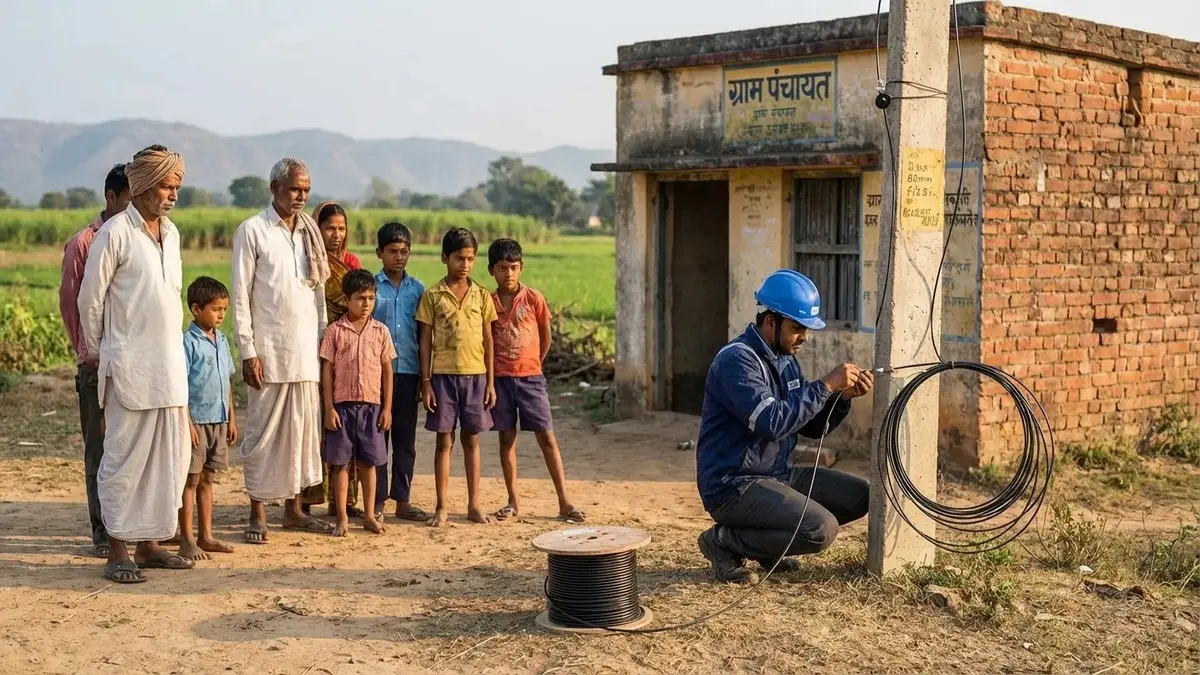
The digital world is growing very fast. In today’s time, the internet is not just a luxury; it has become a basic need. We use it for education, business, healthcare, entertainment, and to talk to our loved ones. But for a long time, there has been a big gap between the cities and the villages when it comes to internet speed and availability. While cities enjoy high-speed broadband, many villages still struggle with slow mobile data or no internet at all.
To fix this problem and make sure every citizen of India can use fast internet, the Indian government has started a new mission. It is called the Rashtriya Fiber Yojana 2026. This is a big and ambitious project. In simple words, this scheme aims to connect every village and every household in India with a high-speed internet cable, also known as optical fiber.
In this blog post, we will understand what this scheme is, why it is important, how it will work, and what benefits it will bring to common people like you and me.
What is Rashtriya Fiber Yojana 2026?
The Rashtriya Fiber Yojana 2026 is a central government project. Its full form is often linked to the BharatNet project, which was previously known as the National Optical Fibre Network (NOFN). The target of this new phase, or the “2026” vision, is to complete the connectivity in a time-bound manner.
Think of it like this: just as we have roads and highways to travel, the government is now building information highways. These are special cables made of glass (optical Rashtriya Fiber Yojana) that can carry a huge amount of data at the speed of light. Under this scheme, these cables will be laid out to reach the most remote corners of the country.
The main goal is to provide Broadband (High-speed internet) to every home, especially in rural areas. The government wants to achieve this target by the year 2026, hence the name “Rashtriya Fiber Yojana 2026.”
Why is This Scheme Needed?
You might think, “I already use the internet on my phone. Why do we need a separate fiber connection?” The answer is simple: Speed and Stability.
- The Speed Problem: Mobile data (4G/5G) is good for watching a video or sending a message, but it can be slow and sometimes breaks. For things like online classes, video conferencing for business, or downloading large files, you need a stable, high-speed connection. Rashtriya Fiber Yojana optic internet provides speeds that mobile data simply cannot match.
- The Digital Divide: There is a huge difference between the digital facilities in cities and villages. Students in cities can attend online classes smoothly, but students in villages often miss out because of network issues. This scheme aims to remove this difference.
- Boosting the Rural Economy: If every village has high-speed internet, new businesses can start. Farmers can check the latest prices of crops online, artisans can sell their products across the world, and young people can find work online without having to move to big cities.
- Better Government Services: Many government services and schemes are now online. With good internet, people in villages can easily apply for caste certificates, income certificates, or other benefits without having to travel to the town office and stand in long lines.
Key Features of the Yojana
The Rashtriya Fiber Yojana 2026 is not just about laying down cables. It is a complete plan to change how rural India uses technology. Here are its main features:
- Fibre to the Home (FTTH): This is the most important feature. The goal is to take the fiber cable directly to your house. This ensures that the internet speed you get is the best possible.
- Affordable Internet: The government plans to keep the prices very low so that every family, even those with lower incomes, can afford it. There is also talk of providing some free data every month for essential services.
- Using the Existing Network: The scheme will not start from zero. It will use the existing infrastructure of public sector companies like BSNL (Bharat Sanchar Nigam Limited) and RailTel. They already have a lot of Rashtriya Fiber Yojana cable laid across the country, especially along railway tracks.
- Public Wi-Fi Hotspots: Apart from home connections, the government will also set up public Wi-Fi hotspots in village centers, schools, and panchayat offices. So, even if someone cannot afford a personal connection at first, they can still use the internet at these public places.
- Involving Private Companies: To make the project successful and maintain the service well, the government will also take help from private internet companies. This is called a Public-Private Partnership (PPP).
How Will It Work? (Implementation Model)
Implementing such a huge project is not easy. India has over 6 lakh villages. Connecting every single one requires a clear plan. The work is usually divided into three phases:
- Creating the Core Network: First, a strong network of fiber cables is created to connect all the district headquarters and blocks (sub-districts).
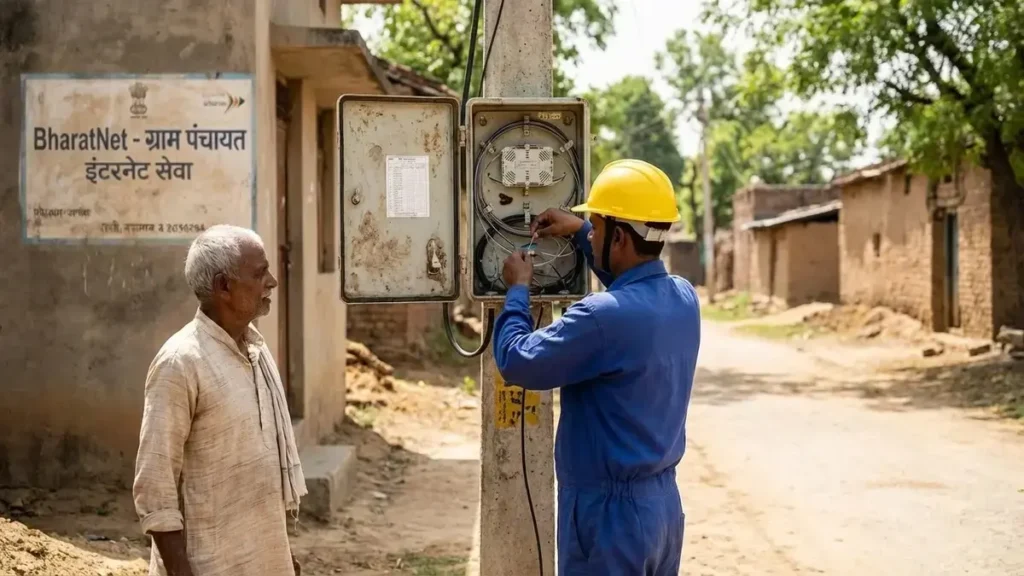
- Connecting the Village: From the block, the Rashtriya Fiber Yojana cable is taken to every Gram Panchayat (Village Council) . This was the main focus of the earlier phase of BharatNet.
- The Last Mile Connectivity: This is the final and most difficult step. This means taking the connection from the Gram Panchayat to every individual household. This is the main target of the 2026 vision.
To manage this, the government has set up a special purpose vehicle called Bharat Broadband Network Limited (BBNL) .
Benefits for Different People (The Impact)
This scheme will change the lives of people in many different ways. Let’s look at how it will help different sections of society:
| Beneficiary | How They Will Benefit |
| Students | They can attend online classes without interruption. They can access digital libraries, watch educational videos on YouTube, and do research for their projects easily. Even if schools are closed, learning can continue. |
| Farmers | Farmers can check the weather forecast before planting crops. They can find the best price for their produce in different markets (Mandi) and avoid being cheated by middlemen. They can also learn about new farming techniques and government schemes online. |
| Small Business Owners | A local shopkeeper can start selling products online. A village tailor can show his designs on Instagram and get orders from cities. Handicraft makers can list their products on websites like Amazon or Flipkart. |
| Healthcare | This is a big one. Through Telemedicine, village patients can talk to big city doctors on a video call. They can show their reports and get advice without spending money on travel. This can save both time and lives in emergencies. |
| Government Employees | Workers at the Gram Panchayat level can work faster. They can update land records online, disburse pension payments digitally, and maintain transparency in their work, which reduces corruption. |
| General Public | People can easily pay their electricity and water bills online. They can book railway or bus tickets. They can access entertainment like movies and music. Most importantly, they can stay connected with family members living in other cities or abroad through high-quality video calls. |
Challenges in Implementation
While the idea is great, the road to 2026 is not without its hurdles. The government and the implementing agencies will have to face some tough challenges:
Related Article: Mahatma Gandhi National Rural Employment Guarantee Act
- Geographical Barriers: India has a diverse landscape. Laying Rashtriya Fiber Yojana cables in the high mountains of the Himalayas, dense forests of the Northeast, or desert areas of Rajasthan is technically very difficult and expensive.
- Right of Way (RoW) Issues: To lay cables, you often have to dig up roads or pass through private land. Getting permission from state governments, local authorities, and landowners can be a slow and complicated process.
- Vandalism and Theft: In some areas, there is a risk of cable theft or damage during construction work. Protecting this infrastructure once it is laid is also a big task.
- Maintenance: The real work starts after the connection is given. If a cable breaks in a remote village, who will fix it? How quickly can they reach there? A strong local maintenance team is required.
- Digital Literacy: Even if you provide the fastest internet, people need to know how to use it. The government will have to run awareness campaigns to teach people, especially the elderly, how to use the internet for their benefit.
The Road to 2026: A Timeline
The government has set a clear deadline. The aim is to make this a reality by 2026. Here is a likely roadmap of how the project will progress:
- By End of 2024: Complete the connectivity of all Gram Panchayats (village councils) across the country. This is the foundation.
- During 2025: Start the massive work of connecting individual households (Last mile connectivity). This will involve surveying villages, enrolling customers, and laying the “drop cables” from the main line to the houses.
- By 2026: The target is to have a significant percentage of rural households connected and actively using the high-speed internet. This is the year of realization of the “Digital India” dream in the true sense.
Conclusion
The Rashtriya Fiber Yojana 2026 is more than just a government scheme. It is a vision for a new India. It is an understanding that in the 21st century, progress is directly linked to connectivity. By providing high-speed internet to every village, the government is not just giving access to the web; it is opening the doors to better education, better healthcare, better business, and better opportunities for millions of people.
When the Rashtriya Fiber Yojana reaches a small village, it will bring the whole world with it. A student in a remote village will be able to compete with a student in Delhi. A farmer will have the power of information in his hands. A local artisan will have a global market.
Frequently Asked Questions (FAQs) About Rashtriya Fiber Yojana 2026
1. What is the main goal of Rashtriya Fiber Yojana 2026?
The main goal is to provide high-speed broadband internet connection to every household in India, especially in rural and remote areas, through optical Rashtriya Fiber Yojana cables by the year 2026.
2. Is this scheme free of cost?
No, it is not completely free. The government aims to provide internet at very affordable rates. There may also be plans to offer some amount of free data for basic usage, but a paid connection will be required for high-speed unlimited internet.
3. How is this different from the mobile internet I use now?
Mobile internet (4G/5G) is wireless and can be slow or unstable during peak times. Rashtriya Fiber Yojana optic internet is 100 times faster, more stable, and more reliable. It is best for activities like online classes, work from home, and watching 4K videos without buffering.
4. Will this scheme only benefit cities?
No, this scheme is designed specifically for rural India. While cities already have good broadband, the focus of Rashtriya Fiber Yojana 2026 is to take Rashtriya Fiber Yojana connections to villages and small towns that currently lack high-speed internet.
5. How can I apply for a connection under this scheme?
The application process will start once the Rashtriya Fiber Yojana cable reaches your village. You will likely be able to apply online through a national portal or by visiting your local Gram Panchayat office or the nearby BSNL/ISP office.
6. What is the role of BSNL in this project?
BSNL is the main government agency responsible for implementing the project. They are using their existing network and manpower to lay the cables and will also be one of the main service providers offering internet plans to customers under this scheme.
7. When will this scheme be completed?
The government has set a target to complete the connectivity project by the end of 2026. Work is going on in full swing across the country to meet this deadline.
Leave a Comment