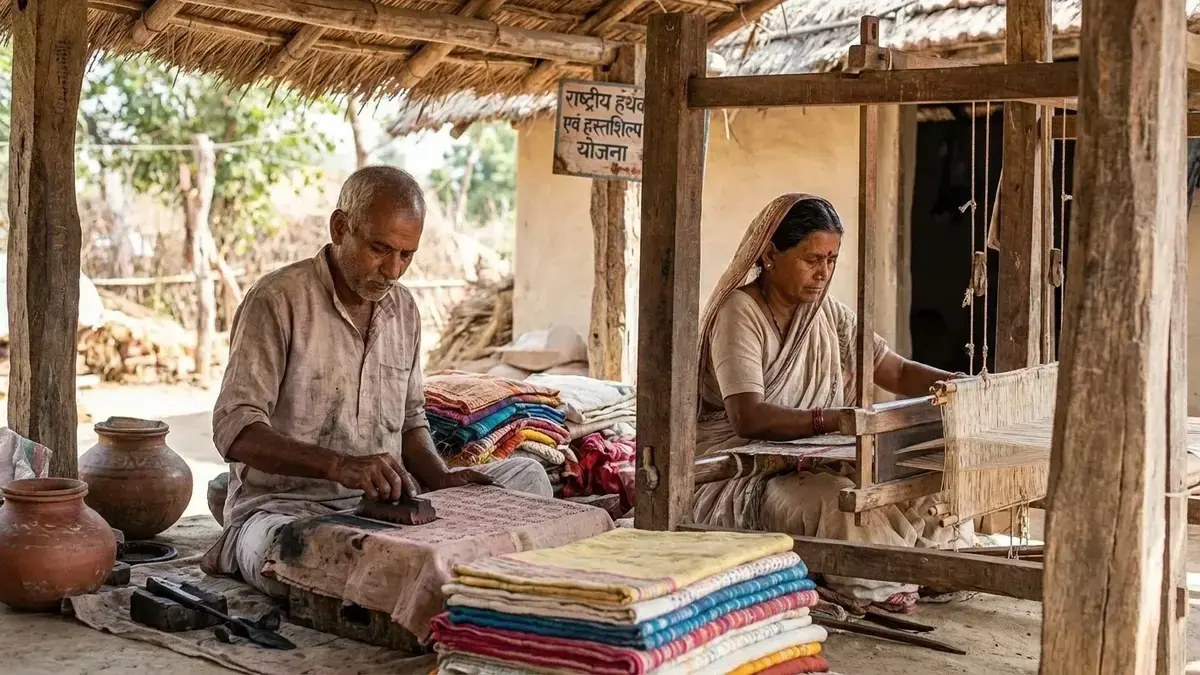
India is a land of rich culture and tradition. For centuries, the magic of Indian handlooms (Hathkargha) and handicrafts (Hastshilp) has been famous all over the world. The beautiful sarees, carpets, pottery, and wooden toys made by Indian artisans are not just products; they are pieces of art that tell a story.
However, the weavers and artisans who create these masterpieces often face many problems. They struggle with old tools, lack of money, and difficulty in selling their goods in big markets.
To solve these problems and to keep India’s traditional art forms alive, the government started a special mission called the Rashtriya Hathkargha evam Hastshilp Yojana.
In this post, we will explain everything about the Rashtriya Hathkargha evam Hastshilp Yojana 2026 in very simple words. We will cover what it is, its benefits, who can apply, and answer some common questions.
What is the Rashtriya Hathkargha evam Hastshilp Yojana?
The name “Rashtriya Hathkargha evam Hastshilp Yojana” translates to “National Handloom and Handicrafts Scheme.” It is a central government scheme, meaning it runs all over India.
Think of this scheme as a big umbrella that covers all the small problems of weavers and artisans. Before this, there were separate schemes for handlooms and handicrafts. But in this new version (updated for Rashtriya Hathkargha evam Hastshilp Yojana 2026), the government has combined them to make things simpler and more effective.
The main goal is to make sure that the people who make these beautiful products get a fair price, have access to modern technology, and can sell their goods not just in India, but all over the world.
Resent Post- click hear
Key Features and Benefits of the Scheme (Rashtriya Hathkargha evam Hastshilp Yojana 2026 Update)
The 2026 version of this scheme has introduced some new and exciting features to help artisans in the modern world. Here are the main highlights:
1. Financial Help and Subsidies
Money is the biggest need for any business. This scheme makes sure artisans don’t run out of funds.
- Credit at Low Interest: Artisans can get loans from banks at a very low interest rate (subsidized interest). This means they pay less money back to the bank.
- Margin Money Assistance: The government helps with the initial down payment required to get a loan.
- Working Capital: Loans for buying raw materials like yarn, wood, or clay.
2. Modern Tools and Technology
Many artisans still use very old tools. This scheme helps them upgrade.
- New Equipment: The government gives a subsidy (sometimes up to 90%) to buy modern looms and tools. This helps them make more products in less time and with better quality.
- Common Facility Centres (CFCs): These are big workshops set up in clusters (areas where many artisans live). Here, artisans can use big machines, get training, and even finish their products together. It’s like a shared office for weavers!
3. Marketing and Selling Support
“Rashtriya Hathkargha evam Hastshilp Yojana 2026” Making a great product is one thing, but selling it is another. This scheme acts like a bridge between the village and the city (or the world).
- Trade Fairs and Exhibitions: The government organizes exhibitions in big cities like Delhi, Mumbai, and even in other countries. Artisans get a stall (often for free or at a low cost) to show and sell their products directly to customers.
- E-Commerce Support: In Rashtriya Hathkargha evam Hastshilp Yojana 2026, the digital world is very important. The scheme helps artisans list their products on big government e-commerce portals like GeM (Government e-Marketplace) and other popular online shopping sites. This helps them reach customers who shop online.
4. Skill Development and Training
To stay in business, “Rashtriya Hathkargha evam Hastshilp Yojana 2026″you must learn new designs and trends.
- Workshops: The government organizes training programs where master weavers teach new and unique designs to younger artisans.
- Design Innovation: They also bring in fashion designers from big cities to work with rural artisans. This creates “fusion” products that are traditional but also look modern and stylish.
5. Social Security and Welfare
This is a very important part of the Rashtriya Hathkargha evam Hastshilp Yojana 2026 scheme. It’s not just about business; it’s about the person.
- Health Insurance: Many state governments, under this scheme, provide health insurance coverage to registered artisans and their families.
- Maternity and Child Care Benefits: Special provisions for women artisans.
- Pension Schemes: Weavers and artisans can also join pension schemes so they have money when they get old.
Who Can Apply? (Eligibility Criteria)
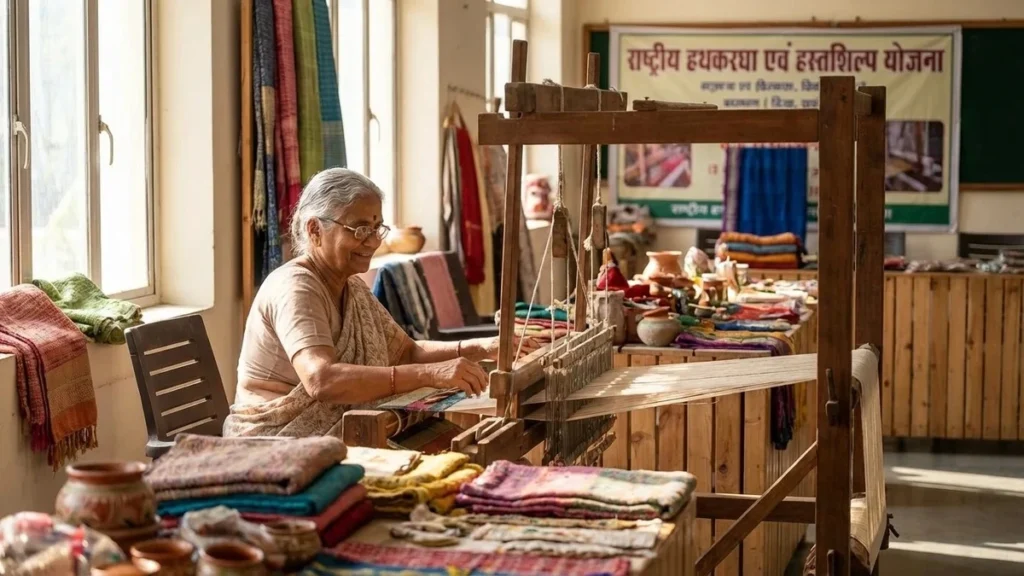
The scheme is made for the real workers. To get the benefits, you need to fit into one of these categories:
- Individual Weavers and Artisans: Any person who is engaged in handloom weaving or handicraft making. You must be above 18 years of age.
- Self-Help Groups (SHGs): Groups of women or villagers who work together to make products.
- Cooperative Societies: Formal groups of weavers registered under a society act.
- Producer Companies: More formal companies set up by artisans.
- Entrepreneurs: Young people who want to start a business in the handloom or handicraft sector.
The most important document you need is a registration. You must be registered on the government portal to prove you are a genuine artisan.
How to Apply for the Scheme?
The application process for the Rashtriya Hathkargha evam Hastshilp Yojana 2026 is mostly done online to make it easy and transparent.
Step-by-Step Application Process:
- Visit the Official Portal: Go to the official website of the Office of the Development Commissioner (Handlooms) or the relevant state handloom department.
- Registration (Pehchan Patra): If you are a new user, you must first register yourself as an artisan. You will need basic documents like Aadhar Card, Bank Account details, and a photo. You will get a unique Artisan ID.
- Login: Use your Artisan ID and password to log in.
- Choose the Component: Look for the “Apply Online” section. You will see different options (like loan subsidy, loom upgradation, marketing support). Choose the one you need.
- Fill the Form: Fill in the application form carefully. Enter all the details about your work, income, and the help you need.
- Upload Documents: Scan and upload all the required documents.
- Submit: Click the submit button. You will get a reference number. Keep this number safe to check your application status later.
If you are not comfortable with computers, you can visit the District Industries Centre (DIC) or the Handloom Department office in your town. The officials there will help you fill the form for free.
Impact of the Scheme on Rural India
This scheme is not just about giving money; it is about giving respect to the artisan. In the last few years, the impact has been huge:
- Stop Migration: Earlier, many weavers left their villages to work in cities as laborers because they couldn’t earn enough from weaving. Now, with better earnings, they are staying back and continuing their family tradition.
- Women Empowerment: A large number of artisans are women. This scheme gives them financial independence. They can now earn money sitting at home.
- Preserving Culture: By making the profession profitable, the scheme ensures that ancient art forms (like specific weaves of a region) do not die out.
- Boost to “Vocal for Local”: The scheme supports the Prime Minister’s vision of “Vocal for Local.” When people buy handloom products, they are supporting local artisans and the Indian economy.
Challenges and the Way Forward
While the scheme is very good, there are still some challenges.
Sometimes, the money reaches the account late. Sometimes, artisans are not aware of all the benefits. For the Rashtriya Hathkargha evam Hastshilp Yojana 2026 to be a complete success, the government needs to spread more awareness in very remote villages and ensure that banks process loans quickly.
Frequently Asked Questions (FAQs)
1. What is the main purpose of this scheme?
The main purpose is to protect traditional arts by providing weavers and artisans with easy loans, modern tools, and direct market access to sell their products.
2. Who is eligible to apply for this Rashtriya Hathkargha evam Hastshilp Yojana 2026?
Any individual weaver, artisan, or self-help group (SHG) above 18 years of age who is engaged in handloom or handicraft work is eligible.
3. Is there a fee for registration?
No. The registration process on the official portal is completely free of cost.
4. How much subsidy can I get for a new loom?
Subsidy amounts vary, but they typically range from 50% to 90% of the loom cost, depending on the category of the applicant (General/SC/ST).
5. Does this scheme help in selling products online?
Yes. The 2026 version actively helps artisans list their products on government e-marketplaces (GeM) and other popular e-commerce websites.

3 thoughts on “Rashtriya Hathkargha evam Hastshilp Yojana 2026:”